

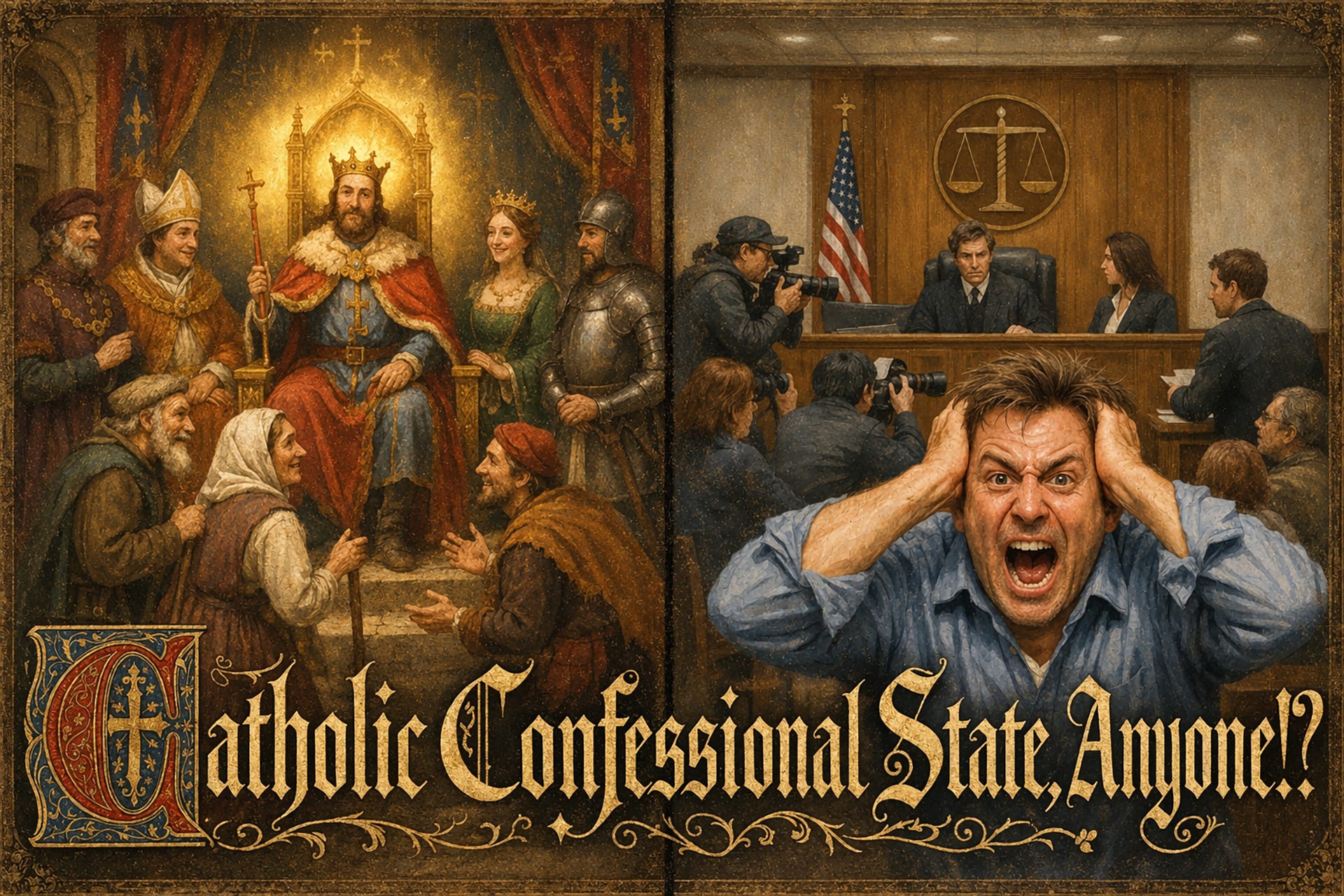
“Catholic Confessional State Anyone!?”
Words that continue to pepper my growing arguments against the futility of wasting our time and energy to keep a union together that primarily exists to enrich those who cannot discern honesty from subterfuge and patriotism from jingoism. Last Thursday Antonio Parkinson a legislator from Memphis TN asked the TN Assembly for permission to secede and form their own republic. Laughter, nay guffaws ensued and many of those laugh were directed my way for saying that I pray Memphis and Mr. Parkinson are successful.
As usual, I was called a traitor and an idiot for even using “the S word” on YouBoob. But seriously, why can’t Memphis do what West Virginia, Maine and North Dakota to name a few more obvious examples, have done? Since I have just re-released one of my all-time favorite books I put back into print, Is Davis A Traitor?, I thought I would answer the “you’re a traitor” charge hurled my way by extending you a lengthy preview of Chapter XVIII “Is Secession Treason?” You can get the book here.
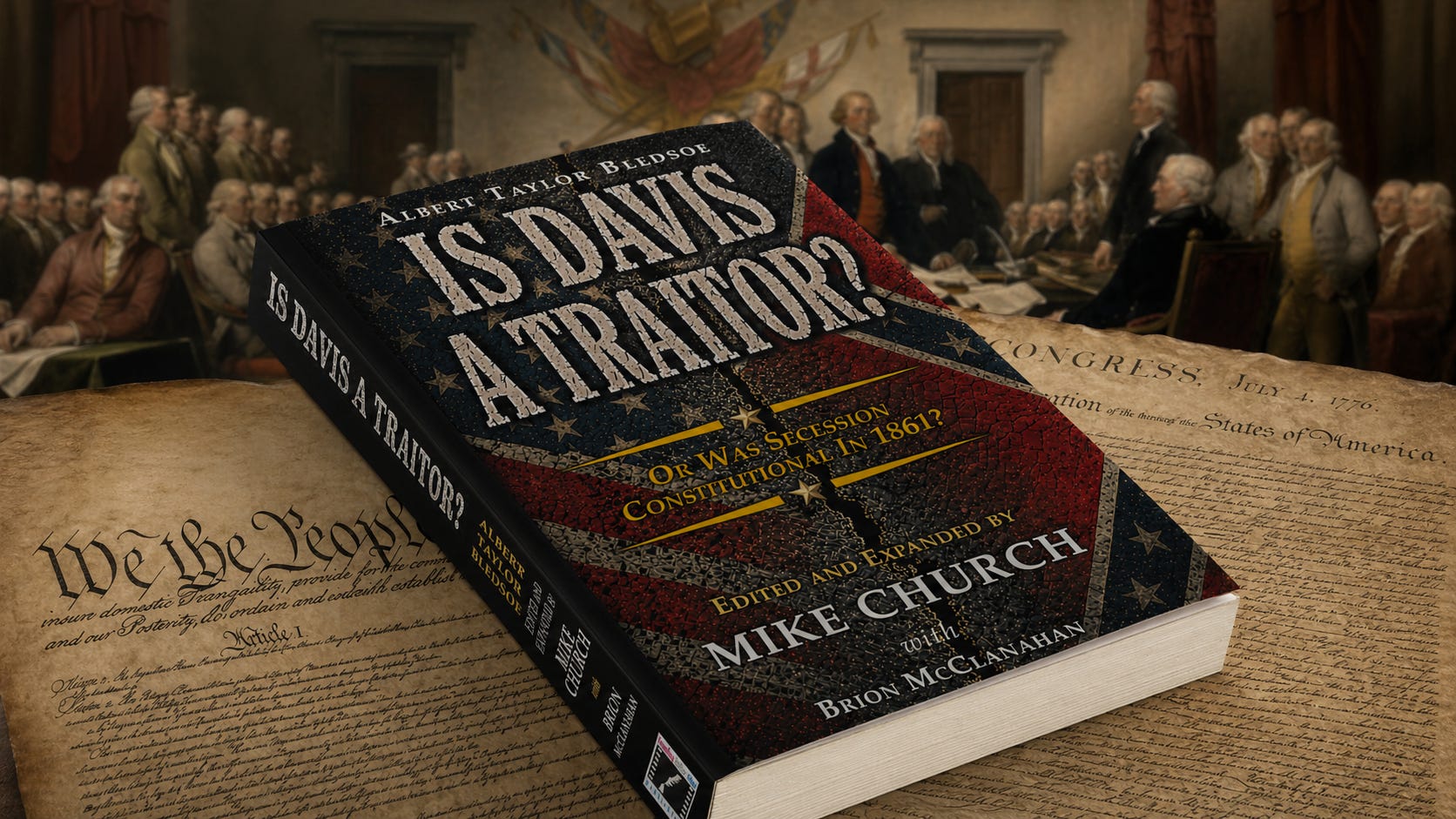
“Was Secession Treason?
The doctrine of secession consists of two propositions: the first asserts that the Constitution was a compact between the States; and the second that a State, or one of the parties, had a right to secede from such a compact. The second proposition is simply an inference from the first. Now, if secession is at all tainted with treason, the crime must lurk in the one or the other of these propositions.
Is it treasonable, then, to assert that the Constitution was a compact between the States, or the members of the Union? No one, it is presumed, will venture on so bold an assertion; for, as we have seen, this was the doctrine of the fathers of the Constitution themselves. It has been shown, by an articulate reference to their writing, that it was clearly and unequivocally the doctrine of Madison, and Morris, and Hamilton, as well as of other celebrated architects of the Constitution. Who, then, will pronounce it treason, or treasonable?
The Federalist, in submitting the Constitution to the people and in pleading the cause of its adoption, did not hesitate to say, as a fact then perfectly well and universally known, that the Constitution was “the compact” to which “the States as distinct and independent sovereigns” were the parties. Did The Federalist espouse treasonable sentiments?
Both Hamilton and Madison, the two great architects of the Constitution, most earnestly and eloquently recommended it to the people in The Federalist and elsewhere as “the compact between thirteen sovereign and independent States.” Is that doctrine treason, then? Is there the least sign, or symptom, or shadow of treason connected with that sentiment of the fathers?
Are those “untrue to their country,” who say, with all the most illustrious fathers of the Union, that the Constitution was a compact between the States? On the contrary, are not those untrue to themselves, to their country, and to their God, who, in the midst of so many unquestionable proofs on all sides around them, can assert that the Constitution is not a compact?
Is it “the dialect of treason” to say that “the States acceded to the Constitution?” In other words, is the language of Wilson, and Morris, and Randolph, and Franklin, and Jefferson, and Washington, to be denounced as “the dialect of treason?” Is it treason to understand the Constitution as it was understood by the great patriots and statesmen from whose wisdom it proceeded? Is it treason to adhere to their views, sentiments, and language? Or is it loyalty to depart from their views, sentiments, and language; denouncing them as the inventions of modern rebels, and blood-thirsty traitors?
No one can, or will, venture to answer this question in the affirmative. Ignorance and passion may have done so in times past. But who can read the history of his country, who can behold the great fact that the Constitution is a compact between the States blazing all over its ample pages—nay, written there by the fathers of the Republic themselves—and then deliberately pronounce it a treasonable sentiment?
Can any man do so? Has any man sufficient strength of continence for such an achievement? If so, then indeed must his front of brass, and his heart of iron, forever remain an incomprehensible mystery to all reasonable men.
Nay, if any party or majority, aided by the united strength of all their countenances, should pronounce such a fact treasonable, this would only prove that they must have been ignorant of the history of their country.
But, whether from ignorance, or from malice, or from both, shall it ever be the lot of American citizens to live in a land in which truth shall be treason, and history rebellion?
Shall it ever come to this—O ye blessed spirits of departed heroes and patriots!—shall it ever come to this, that a dungeon and a halter await the man who may have the most devoutly cherished thy sentiments, and the most implicitly trod in thy footsteps?”
So yes, Memphis. Southern Illinois, Western Pennsylvania and everything east of the Shasta Mountains in California can secede and for their own self-governments, just as the Constitution’s Framers did and we should get about the business of doing so again, achieve governments or hell, kingdoms that are sovereign, in scale and free.
Catholic Confessional State, anyone?